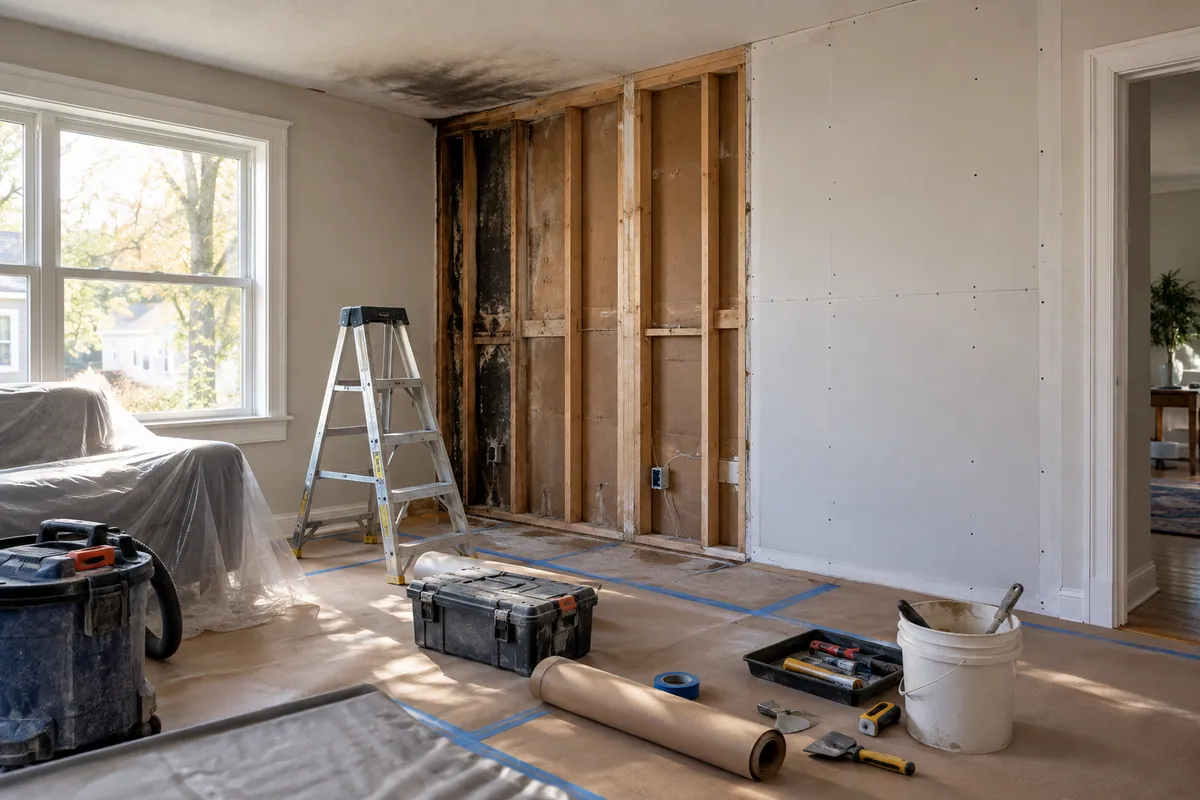
Separate the insurance claim from the home’s current condition
Two questions often become mixed together after a fire: whether the existing claim is finished and whether the building is ready for a new policy. They are related, but they are different. A payment dispute can remain open after construction is complete. A claim can also be closed while the owner still has repairs to finish.
Prepare an answer to each question independently. Describe the claim status using your insurer’s latest written information. Describe completed work using invoices, photographs, and inspection records. If a document is missing, identify it as pending. This makes your situation easier to evaluate without implying that claim closure proves the house is ready to occupy.
Show what happened and what was repaired
An application that says only “fire loss” leaves several important questions unanswered. Was the damage limited to an appliance, or did it involve structural framing? Was the fire’s cause established? Did smoke or firefighting water affect areas beyond the room where it started? A short factual description helps an agent request the right review.
Use the fire department report and qualified contractors’ records when available. If the official cause is undetermined, use that wording. Do not replace uncertainty with a theory about wiring, cooking, or equipment. Your account should distinguish a confirmed finding from something a neighbor, contractor, or family member suggested.
Build a repair record that matches the loss
| Issue to explain | Helpful supporting record | Detail to make clear |
|---|---|---|
| Origin and cause | Fire incident or investigation report | Confirmed findings and any unresolved questions |
| Electrical damage | Electrician’s invoice and applicable inspection approval | Which circuits, equipment, or panels were repaired or replaced |
| Structural restoration | Contractor scope, completion invoice, and required permits | Completed structural work and remaining work |
| Smoke and water restoration | Restoration company’s work summary | Areas treated and services performed |
| Return to occupancy | Applicable local approvals and your occupancy statement | Actual move-in date or current expected return |
You do not need to manufacture a certification that the contractor never issued. Ask the prospective insurer which documents it requires before paying for an additional inspection. Existing project records may answer the question, and a new report may need a particular scope to be useful.
Explain where you are living during recovery
If your family is staying elsewhere, tell both the existing insurer and the agent reviewing replacement coverage. Explain whether the home contains furniture, whether utilities operate, whether anyone stays overnight, and what construction is happening. Ask the insurer how its policy treats that situation. Labels such as vacant, unoccupied, and under renovation should be evaluated using the relevant policy language.
Do not describe the house as occupied simply because you visit daily or intend to return. Equally, do not assume a temporary absence automatically has the same treatment as an abandoned house. Provide the facts and request a written explanation of any coverage conditions that apply during the transition.
For a home with major work still underway, ask about coverage appropriate to the construction and occupancy arrangement. A specialist may need to review renovation or other property coverage. Any proposed solution should address the building, your belongings where applicable, and liability exposures. A policy name alone does not establish that all three are included.
Keep the existing fire claim organized while shopping
Opening a new policy does not turn an earlier fire into a new covered event. Keep working with the company responsible for the policy that applied when the loss happened, subject to that policy’s terms. Maintain the claim number, adjuster contact, payment records, and outstanding requests in a separate recovery folder.
If a new insurer asks why the claim remains open, explain the actual reason. For example, the building repairs might be finished while a personal property inventory remains under review. Alternatively, a contractor supplement might concern work that has not yet been done. Those situations should not be presented as interchangeable.
Before changing policies, ask the current insurer how the change affects administration of any remaining claim benefits, including additional living expenses or recoverable depreciation. Keep complying with required documentation and deadlines. Do not withdraw a legitimate pending issue just to make an application look simpler.
Address the specific cause without promising another fire cannot happen
The strongest explanation connects completed work to the known concern. If damaged electrical components were replaced, identify the work and its documentation. If a particular appliance was involved, explain whether it was removed or replaced. If the fire involved a chimney, provide the professional inspection and repair record that addresses that system.
Keep future plans separate from completed improvements. “Smoke alarms scheduled for replacement” and “smoke alarms replaced” describe different conditions. Ask whether a proposed improvement affects eligibility or a discount before assuming it will change the result. Safety work may be worthwhile even when an insurer offers no pricing credit.
A regional wildfire presents a different context from an isolated interior fire. Rebuilding documentation still matters, but an insurer may also evaluate the location’s continuing wildfire exposure. Ask the agent whether the obstacle involves the prior loss, the property’s present features, or availability in the area.
Review replacement coverage with the rebuild in mind
After significant repairs, verify that the application describes the house as it now exists. Changes to floor area, finishes, electrical systems, roof materials, or construction should be reflected accurately. Ask the agent to explain the dwelling replacement cost estimate and which assumptions changed after the restoration.
Request an explanation of any restriction addressing existing damage, incomplete work, or a particular property condition. Do not rely on a reassuring summary when the quote includes unfamiliar exclusions. If you are considering narrower coverage, identify the expense you would be accepting yourself and discuss whether the arrangement meets your mortgage requirements.
- Confirm the property address, named insured, and actual occupancy.
- Review the dwelling limit, deductible, and claim settlement basis.
- Ask about personal property and additional living expense protection.
- Identify inspection requirements and any repair conditions after binding.
- Get the effective date and evidence of coverage in writing.
Use a practical next-step sequence
Start with the date your current coverage ends, if it is ending. Send the notice with your fire summary so the agent understands the urgency. Then request the documents most likely to answer the underwriting questions: current claim status, repair completion evidence, and occupancy details. Keep shopping while missing paperwork is being obtained.
If one company declines, ask which specific fact prevented an offer and whether completed documentation would change the review. Another insurer may have different eligibility rules, but no agent can promise acceptance. Where appropriate, ask a licensed professional about specialty markets and the residual market options available in your state.
Do not reenter a damaged house to take application photographs until the fire department or responsible authorities say it is safe. The U.S. Fire Administration emphasizes that damaged structures, utilities, soot, and water can create hazards after the flames are out. Existing contractor photographs are a better starting point when access remains restricted.
Continue with a related guide
Frequently asked questions
Can I get homeowners insurance after a fire claim?
Coverage may be available, depending on the insurer, the property, and the loss history. Give an agent the fire details, repair records, and current occupancy information. A decline from one company does not establish that every company will reach the same decision.
Does my fire claim have to be closed before I can shop?
You can begin asking about options while the claim is open. Whether an insurer will offer coverage is a separate underwriting decision. Explain why the claim remains open and distinguish pending payment issues from incomplete repairs.
Will a closed claim prove that my home is fully repaired?
No. Claim closure describes the insurer’s file status, while repair completion describes the property. Keep contractor invoices and applicable inspection approvals even if the claim is closed. Ask what evidence the prospective insurer needs.
What if I am living in a rental while my house is repaired?
Tell the agent where you are staying and describe the home’s actual condition and use. Ask how the current and proposed policies treat your absence and construction. Do not assume ordinary owner-occupied coverage automatically fits every rebuilding situation.
Will new insurance pay for damage from the old fire?
A replacement policy is not a way to insure a loss that already happened. Continue addressing the original fire with the insurer responsible for the applicable policy. Review any existing-damage restriction in the new offer before accepting it.
Does replacing electrical wiring guarantee approval?
No. Documented electrical repairs may answer a particular concern, but an insurer can consider other property and eligibility factors. Describe exactly what was replaced and obtain any required inspection documentation. Avoid claiming the entire system was replaced if only part was repaired.
Do I need a new inspection after fire repairs?
Local requirements and insurer requirements can differ. Gather approvals already issued for the work, then ask the prospective insurer whether it needs anything additional. Confirm the requested inspection’s scope before ordering a new report.
Should I cancel my existing policy when I receive a quote?
A quote by itself does not establish that replacement coverage has started. Obtain written confirmation of the new coverage and its effective date before arranging cancellation. Coordinate outstanding claim questions and mortgage documentation during the change.
Consumer resources
These resources provide background. State-specific examples do not create a nationwide rule.