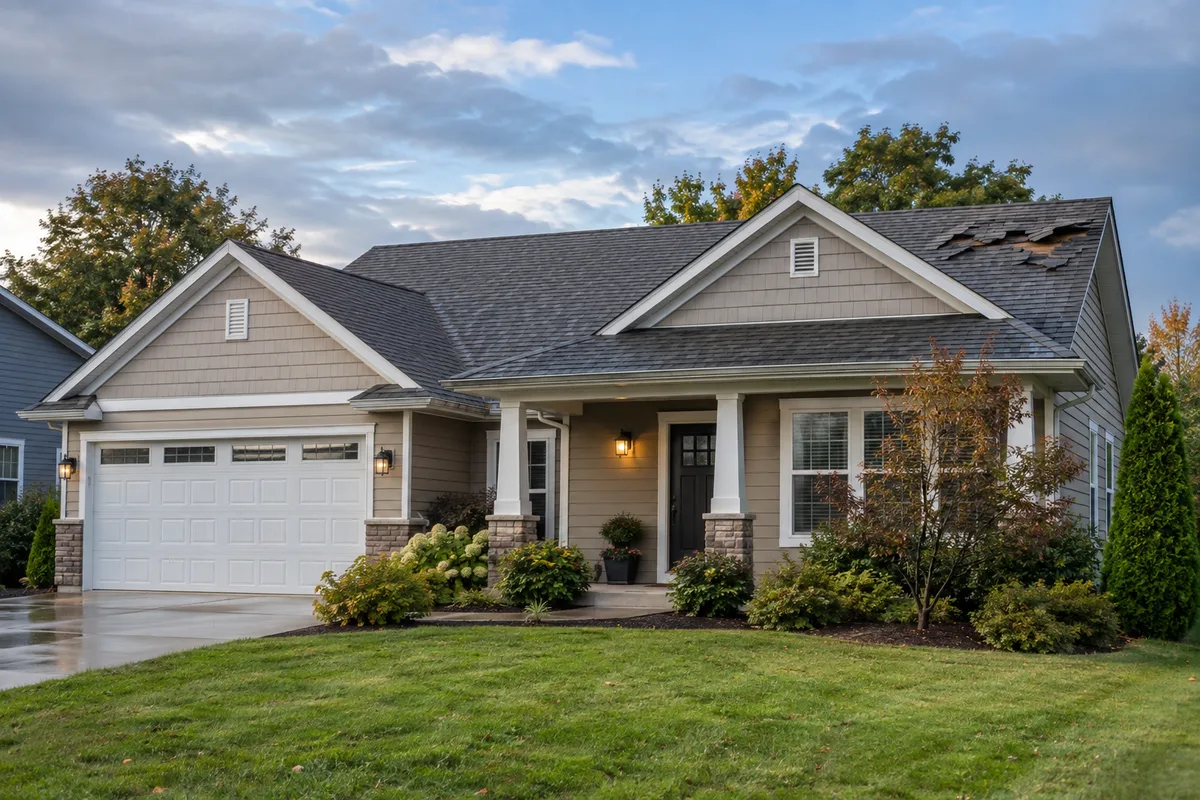
Separate the claim decision from the insurance decision
An adjuster evaluates a reported loss under the policy that applies to it. Underwriting evaluates whether an insurer will offer or continue coverage. Those processes can overlap, but a paid roof claim does not itself prove that the roof was replaced, and a completed replacement does not erase the claim history.
If you receive a nonrenewal or repair notice, ask what the insurer believes is wrong now. It may be referring to damage, roof condition, missing repair evidence or another concern. Read that explanation alongside the claim file. A settlement estimate and an underwriting inspection can describe different dates or stages of the work.
Ask who can update the record when repairs are complete. Your adjuster may need invoices to finish the claim, while an underwriting department may need photographs or an inspection for renewal. Send each party what it requests and obtain confirmation rather than assuming documents automatically move between departments.
Understand what caused the damage
A roof can have storm damage, ordinary deterioration and installation problems at the same time. Coverage depends on the event and policy wording, so the presence of an old roof does not answer every claim question. Ask for the inspection findings and the insurer's coverage explanation in writing.
Keep the contractor's assessment, including photographs and the location of damaged areas. If the insurer and contractor disagree, ask them to identify the exact differences in cause, scope or price. A statement that the “whole roof is bad” is less useful than a supported explanation of why particular work is necessary.
Do not change the loss date or describe maintenance as storm damage to fit an application or claim. If you do not know when damage occurred, say so and provide what you observed. Accurate records protect the integrity of both the existing claim and the search for future insurance.
Compare roof settlement methods
A homeowners policy can use one settlement method for much of the dwelling and another for the roof. Read roof endorsements rather than relying only on a replacement-cost label in a quote summary. Ask the agent to explain how a covered roof loss would be paid under the proposed forms.
| Provision | What to understand | Question for the agent |
|---|---|---|
| Replacement cost | Covered repair or replacement is generally valued without a final depreciation deduction, subject to policy conditions. | What must I do to collect any withheld amount? |
| Actual cash value | The settlement generally accounts for depreciation. | How much of the cost would remain mine to fund? |
| Roof payment schedule | A stated schedule may determine payment using factors such as age or material. | Which schedule and calculation apply to this roof? |
| Roof exclusion | Specified roof damage or hazards may be outside coverage. | What exactly is excluded, including related interior damage? |
| Cosmetic damage exclusion | Defined appearance-only damage may be excluded. | How does the form distinguish cosmetic from functional damage? |
Actual cash value and a payment schedule are not interchangeable labels. Ask for the calculation required by the particular contract. Similarly, a cosmetic exclusion is different from excluding a roof entirely or excluding wind and hail. Small wording differences can produce large differences after a loss.
Work through the deductible and depreciation in dollars
Suppose a covered roof replacement is valued at $18,000, the deductible is $3,000 and the applicable depreciation is $6,000. In a simplified actual-cash-value example, the payment would be $9,000, leaving $9,000 for the homeowner. That remaining amount includes both the deductible and depreciation.
Under replacement-cost terms that allow recovery of the depreciation, an initial payment might also be $9,000. An additional amount could become payable after the required work and documentation, subject to the contract. Ask what evidence and deadlines apply. Do not assume the first check represents the complete settlement or that every withheld amount is recoverable.
Review wind and hail deductibles separately. If a policy sets a deductible at 2% of a $400,000 dwelling limit, that is $8,000. Confirm the calculation base and triggering event in the actual policy. A percentage applied to the insured dwelling amount can be much larger than a percentage of the repair bill.
Build a roof record that shows what is there today
Gather the installation invoice, material description, permit or final inspection where applicable, and dated photographs. If only part of the roof was replaced, identify which section. An invoice for a repair should not be used to present the entire roof as new.
Ask the contractor for a clear completion statement describing the work actually performed. Useful detail can include the roof covering, repaired areas and completion date. If different roof sections have different ages or materials, explain those differences. Keep warranties and product records with the file, but do not substitute a manufacturer's expected lifespan for the known installation date.
When the installation year is uncertain, look for prior owner records, permits or contractor invoices. Tell the agent which information is verified and which is estimated. A reasonable search for evidence is better than selecting a favorable year that you cannot support.
Address a roof inspection or age concern directly
Ask what condition the insurer identified and what evidence could resolve the concern. If the decision relied on photographs or aerial imagery, request the relevant image or explanation. A current professional inspection may help clarify whether the pictured condition exists, though the insurer decides what information it will accept.
There is no single roof-age cutoff that describes every company, material and state. Ask about the rules for the actual proposal. A roof's age can also interact with its settlement terms, so an offer of coverage does not necessarily mean it includes the roof protection you had before.
Before paying for a major replacement solely to secure insurance, ask whether the proposed work would satisfy the insurer's requirement and what other conditions remain. Obtain the response in writing. Completing useful work is important, but it should be based on a clear repair and coverage plan rather than an unsupported promise of automatic approval.
Read exclusions before accepting a temporary solution
A policy with limited roof protection may be worth evaluating when other choices are difficult, but the limitation needs a concrete financial review. Ask what happens after hail damage, a wind opening or a leak into the interior. The answer depends on the exclusion's wording and other policy provisions.
Ask whether the mortgage servicer accepts the proposed coverage. Then consider how you would pay for an excluded roof loss or a settlement shortfall. A lower premium does not supply the money for a repair that the policy leaves to you. Compare any available alternatives using total cost and the protection provided.
If the insurer says coverage can be reconsidered after replacement, ask for the required documents and review process. Do not assume the exclusion disappears automatically when the contractor finishes. Obtain the written policy change or replacement contract that actually restores any additional protection.
Keep the claim moving while shopping responsibly
Follow notice and cooperation requirements, and take reasonable steps to prevent additional damage. Use qualified help for roof inspections and emergency work rather than climbing onto an unsafe roof. Document temporary protection and coordinate permanent repairs with the insurer's inspection needs.
When requesting new coverage, disclose the existing damage, repair status and open claim as the application requires. Tell the agent if work will continue after the proposed effective date. Keep the old adjuster's contact details because a new insurer does not simply inherit responsibility for the earlier event.
Your strongest roof file tells a straightforward story: what happened, what was repaired, what remains and what documents verify the current condition. Combined with a careful review of deductibles and roof endorsements, that record makes it easier to assess the options available for your home.
Continue with a related guide
Frequently asked questions
Can a roof claim make it harder to get homeowners insurance?
It can be relevant, along with the roof's condition and the rest of the property's history. Ask an agent to review the specific circumstances. A repaired storm loss and unresolved roof damage need different explanations, so provide both the claim information and evidence of current condition.
Does replacing my roof remove the claim from my history?
No. A replacement documents an improvement to the property, but it does not by itself delete an accurate claim record. Keep the installation invoice and completion photographs so a prospective insurer can distinguish the previous loss from the condition of the roof it is being asked to insure.
What is the difference between roof ACV and replacement cost?
Actual cash value generally subtracts depreciation from covered value. Replacement cost generally allows covered repair or replacement without a final depreciation deduction when policy conditions are met. Deductibles, limits and exclusions still matter. Ask whether payment is staged and what is required to recover any withheld depreciation.
Is a roof payment schedule the same as ACV?
Not necessarily. A schedule can specify a payment percentage or formula based on roof characteristics, while ACV generally involves depreciation. Read the specific endorsement and ask for a sample calculation using your roof. The label alone does not establish how much the policy would pay.
Will a roof exclusion also exclude interior water damage?
It depends on the actual wording and other provisions in the policy. Do not assume that excluding the roof automatically leaves every related interior loss covered. Ask the agent to explain a concrete leak scenario and provide the relevant forms before you accept the offer.
How old can my roof be and still qualify?
There is no universal age limit. Insurer requirements, material, condition, state rules and coverage terms can differ. Provide the verified installation date and condition records, then ask about the specific option. An eligible roof may still have different settlement terms from the rest of the dwelling.
What if my insurer says roof repairs were never completed?
Compare its information with your dated invoices, photographs and any final inspection. Send a concise explanation identifying the work and completion date. Ask which department needs the evidence and whether additional inspection is required. Keep written confirmation of any resulting change to the policy or notice.
Can I buy a new policy while the roof claim remains open?
Possibly, depending on the insurer and the home's condition. Disclose the claim and unfinished work accurately and ask what requirements apply before coverage can begin. Continue working with the original insurer on the existing loss, and coordinate the new policy's effective date to avoid an unintended gap.
Consumer resources
These resources provide background. State-specific examples do not create a nationwide rule.